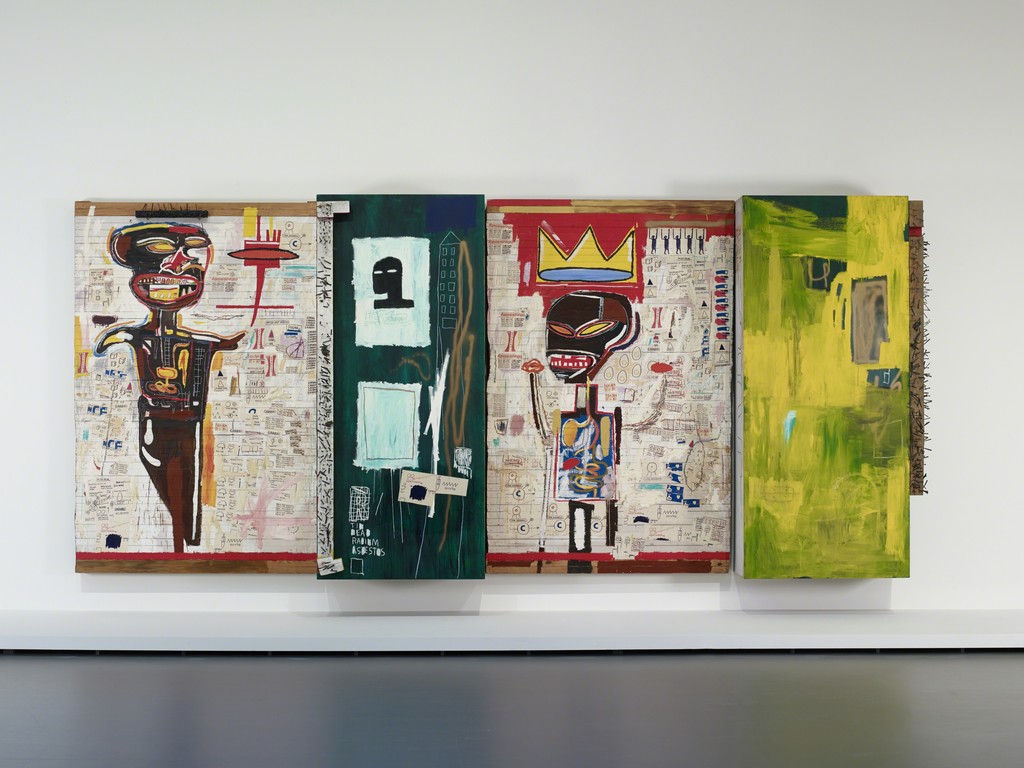
Grillo Jean Michel Basquiat. Jean michel basquiat, graffiti artist. For those of us who missed the original viewing, its virtual.
Suddenly, basquiat went from being a glorified graffiti artist who used sides of buildings as his canvas, to the youngest to exhibit at the whitney biennial in new york. Words, letters, numerals, pictograms, logos, map symbols, diagrams and more. By 1984, he had achieved international stardom for his artwork.
During His Short Yet Productive Career, Basquiat Created More Than 600 Paintings And 1,500 Drawings.
Inspired by pop culture, african sculpture, sacred voodoo mythology and the work of leonardo da vinci, basquiat continually pushed against the edges of art, to the limits of artistic, aesthetic and poetic representation. 96 x 211 1/2 x 18 in. The exhibition was curated by dr.
Dieter Buchhart And Featured Many Of Basquiat’s Most Notable And Coveted Pieces.
The full exhibit spans four floors, comprising almost 70 of the famous contemporary artist’s works from 1980 to 1987. Operating under the pseudonym samo, he emblazoned the abandoned walls of the city with his unique blend of enigmatic symbols, icons and aphorisms. Fondation louis vuitton/marc domage irony of the negro policeman, 1981
(56.4 X 76.4Cm.) Executed In 1984.
Wax crayon, watercolour and graphite on paper. 1984 “grillo” painting on wood. 208 hamilton hall mail code 2805 1130 amsterdam avenue new york, ny 10027.
Jean Michel Basquiat, Graffiti Artist.
There are several amazing and thought provoking pieces that jean michel has done, but the three works of art that will be discussed in this review will be, the nile 1983, untitled “skull” 1984, and “jim crow”. For those of us who missed the original viewing, its virtual. With the use of semiotic analysis, we uncover the hidden meanings within
I Find Basquiat's Style Of Painting Very Interesting.
The first exhibition, where basquiat took part, took place in 1980. 243,8 x 537,2 x 47 cm. Centre culturel français d'abidjan, côte d'ivoire.


