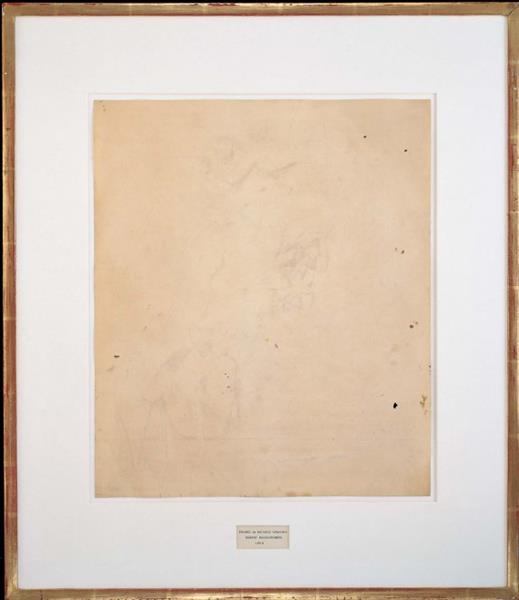
Rauschenberg Erased De Kooning. In 1953, robert rauschenberg erased an art piece created by the abstract expressionist willem de kooning. Robert rauschenberg’s erased de kooning drawing is, as its title suggests, an erased drawing.
“i had been working for. Moreover, its aesthetic quality can be readily associated with minimalist abstraction (though rauschenberg was not himself a minimalist), an art movement widely interpreted as a reaction against abstract expressionism. (64.14 x 55.25 x 1.27 cm) collection sfmoma, purchase through a gift of phyllis wattis, 98.298 cite as:
Robert Rauschenberg Erased De Kooning Drawing, 1953 Traces Of Drawing Media On Paper With Label And Gilded Frame 25 1/4 X 21 3/4 X 1/2 In.
Robert rauschenberg’s erased de kooning drawing is, as its title suggests, an erased drawing. In 1953 robert rauschenberg created the piece erased de kooning by taking a work by william de kooning and erasing it. In 1953 robert rauschenberg, a young, little known artist, took a box of erasers and set to rubbing out a densely layered drawing by willem de kooning, the king of abstract expressionism, and he did it with the master’s permission.
No, Rauschenberg Explained, He Wanted To Erase It.
This is the currently selected item. Rauschenberg believed that in order for this idea to become a work of art, the work had to be someone else's and not his own; Erased de kooning drawing, 1953.
“I Had Been Working For.
In 1953, robert rauschenberg erased an art piece created by the abstract expressionist willem de kooning. “in this “drawing,” he set out to discover if erasure, or the removal of a mark, constituted a work of art. His iconoclasm took a more genteel and personal approach.
In 1953 Robert Rauschenberg Was Experimenting With Erasing Existing Drawings To Create New Art.
The almost blank sheet of paper which is called ‘erased de kooning drawing’ looks exactly what it says on the tin, an erased drawing with a few residue marks remaining which stubbornly refused to be removed. The concept of destroying, or altering, a famous work of art was an approach rauschenberg himself employed and explored with his 1953 erased. The citing “erased de kooning drawing by robert rauschenberg 1953,” is the only hint offered to those who are unacquainted with this drawing.
Part Of Rauschenberg’s Project Was The Wiping Away Of The Lines Made By De Kooning In His Work:
His favorite artist was william de kooning, a successful and inspirational artist. Erased de kooning drawing eludes easy answers, its mysterious beginnings leaving it open to a range of present and future interpretations.” (sfmoma, 2017). (64.14 x 55.25 x 1.27 cm) collection sfmoma, purchase through a gift of phyllis wattis, 98.298 cite as:


